07 / Project
Interactive installation · EEG data visualization · 2013
Starspitter
Visualizing brain waves
Starspitter is an interactive installation that transforms brain activity into generative visual forms in real time.
Combining EEG data, creative programming, handcrafted geometry and projection mapping, the project brings invisible biological signals into physical space.
Originally conceived as my own creative initiative, Starspitter was later adopted by deepblue networks for its Christmas campaign.
- My role
- Creative concept, design, development & fabrication
- Year
- 2013
- Project type
- Personal
- Categories
- Creative technology / Data visualization / Interactive experiences
- Areas
- Creative coding / Real-time data visualization / Physical computing / Generative design / Projection mapping / Digital fabrication
- Technologies
- Processing · NeuroSky MindWave
01 / Concept
Making the invisible visible.
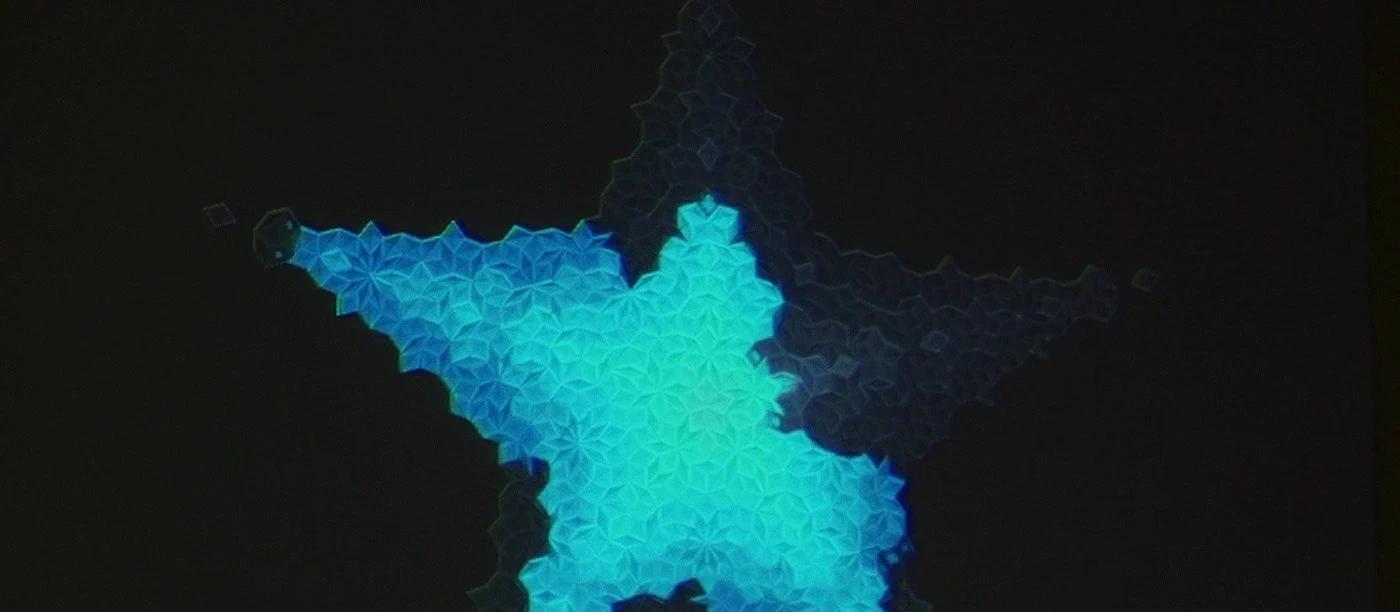
Starspitter began as my own exploration of the relationship between brain activity, generative design and individual expression. I wanted to translate otherwise invisible biological signals into something people could experience, observe and share.
The star became the visual language of the project, its geometric form continuously evolving in response to incoming data.
02 / Real-time visualization
From brain waves to generative geometry.
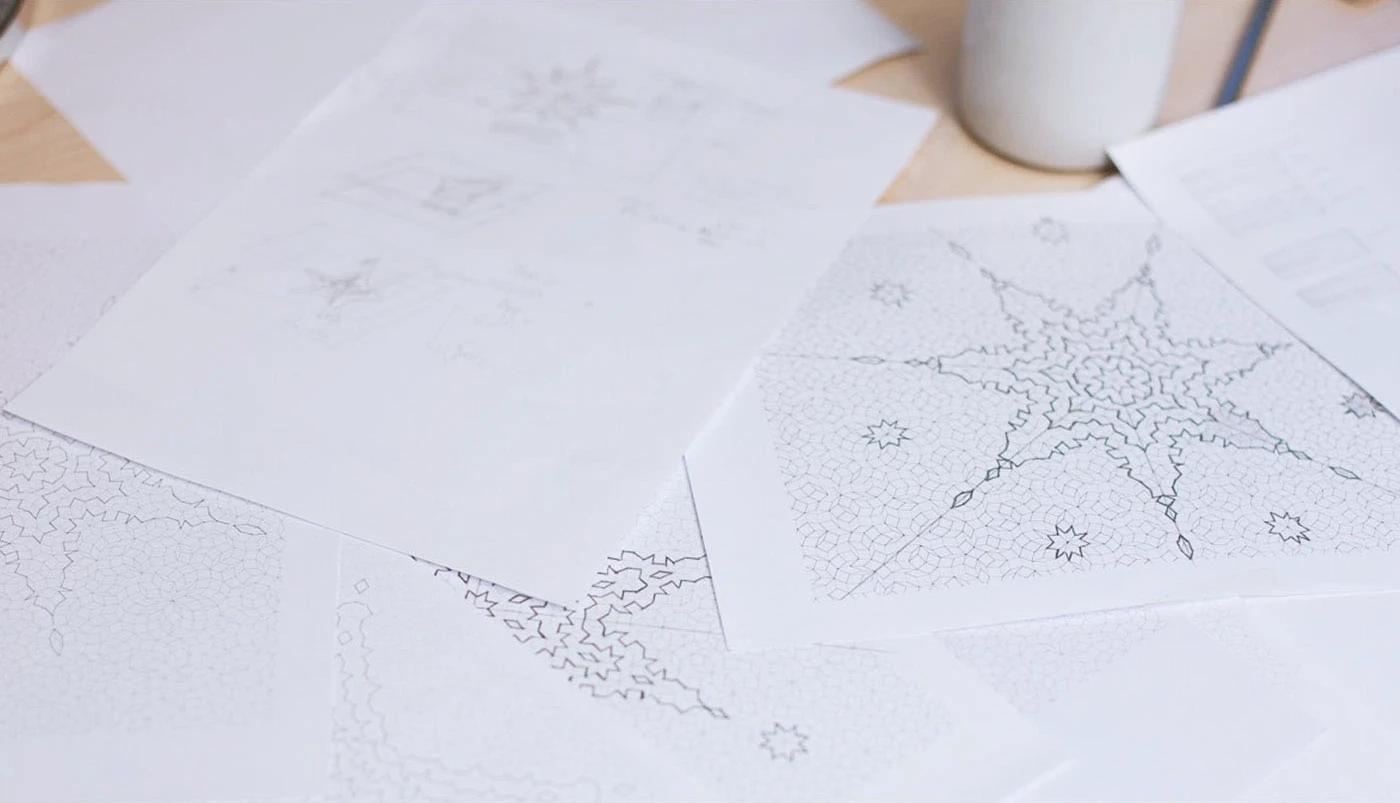
Using a NeuroSky MindWave EEG headset and custom software I developed in Processing, I translated incoming brain activity data into continuously evolving star compositions. Participants could observe their own star changing on the computer screen in real time.
I could manually capture the current state of the visualization, turning a fleeting combination of data into an individual static graphic. Each captured star represented a moment in time: a creative interpretation of biological signals, rather than a validated measure of personality or ability.
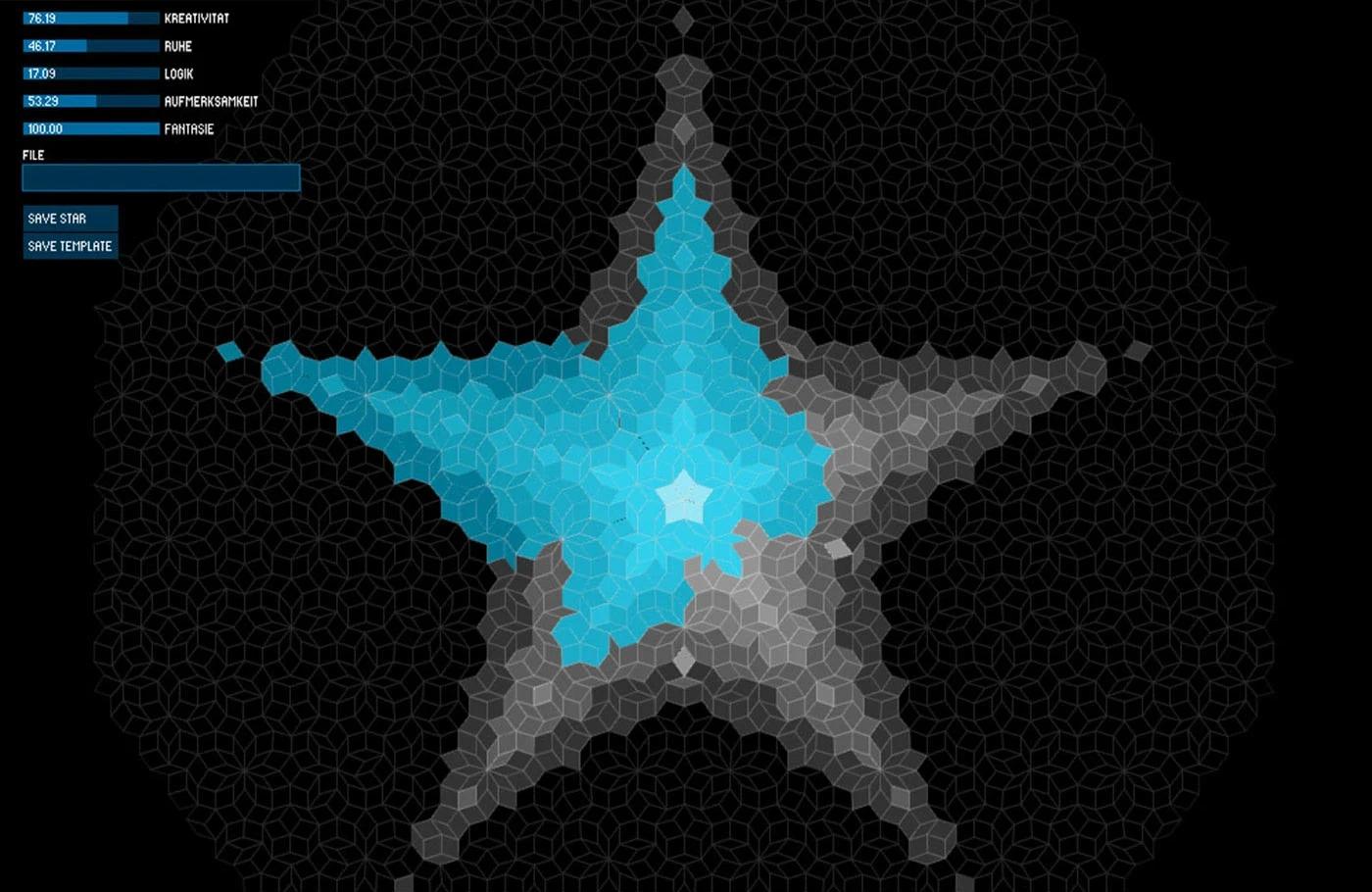
The original Processing visualization in motion, 26 seconds.
Watch on Vimeo ↗03 / Physical fabrication
A thousand pieces. One star.
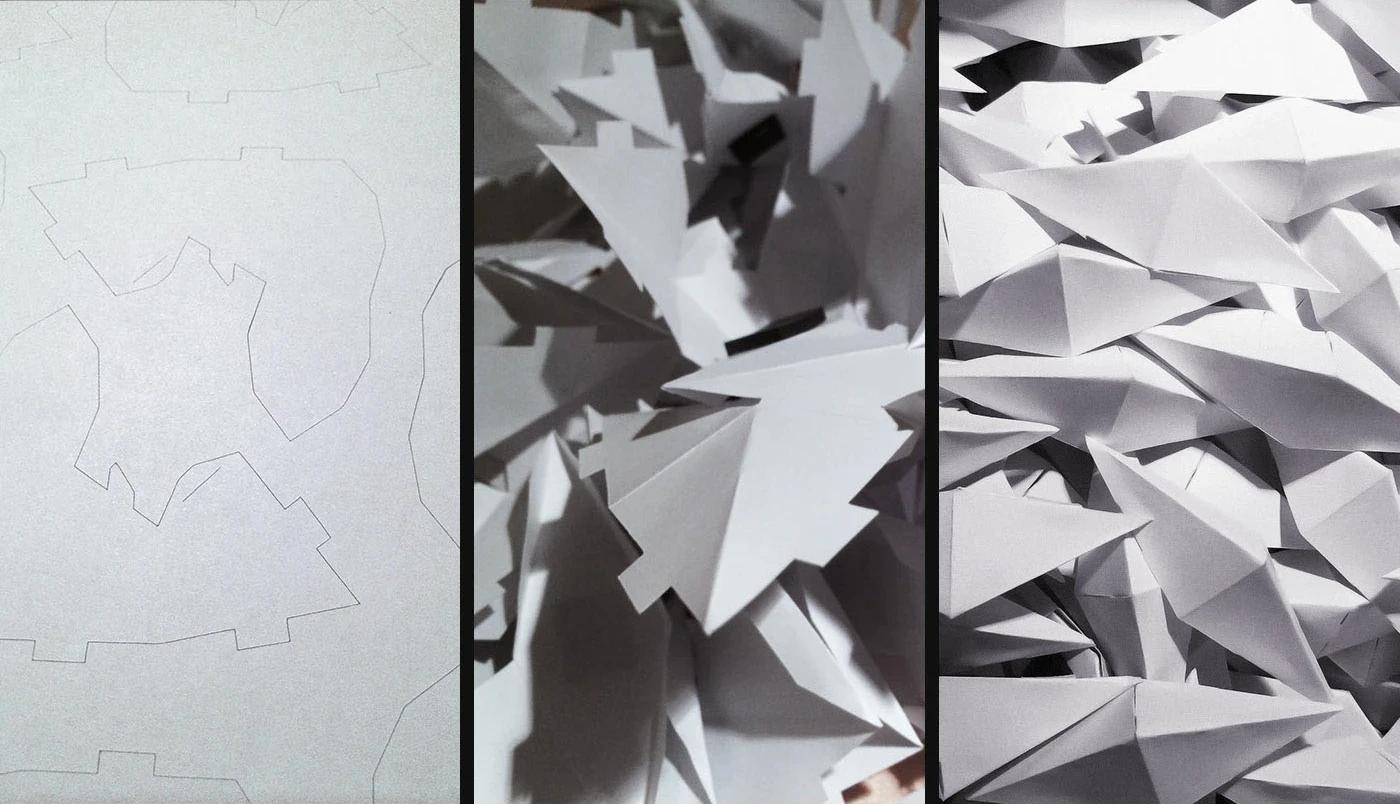
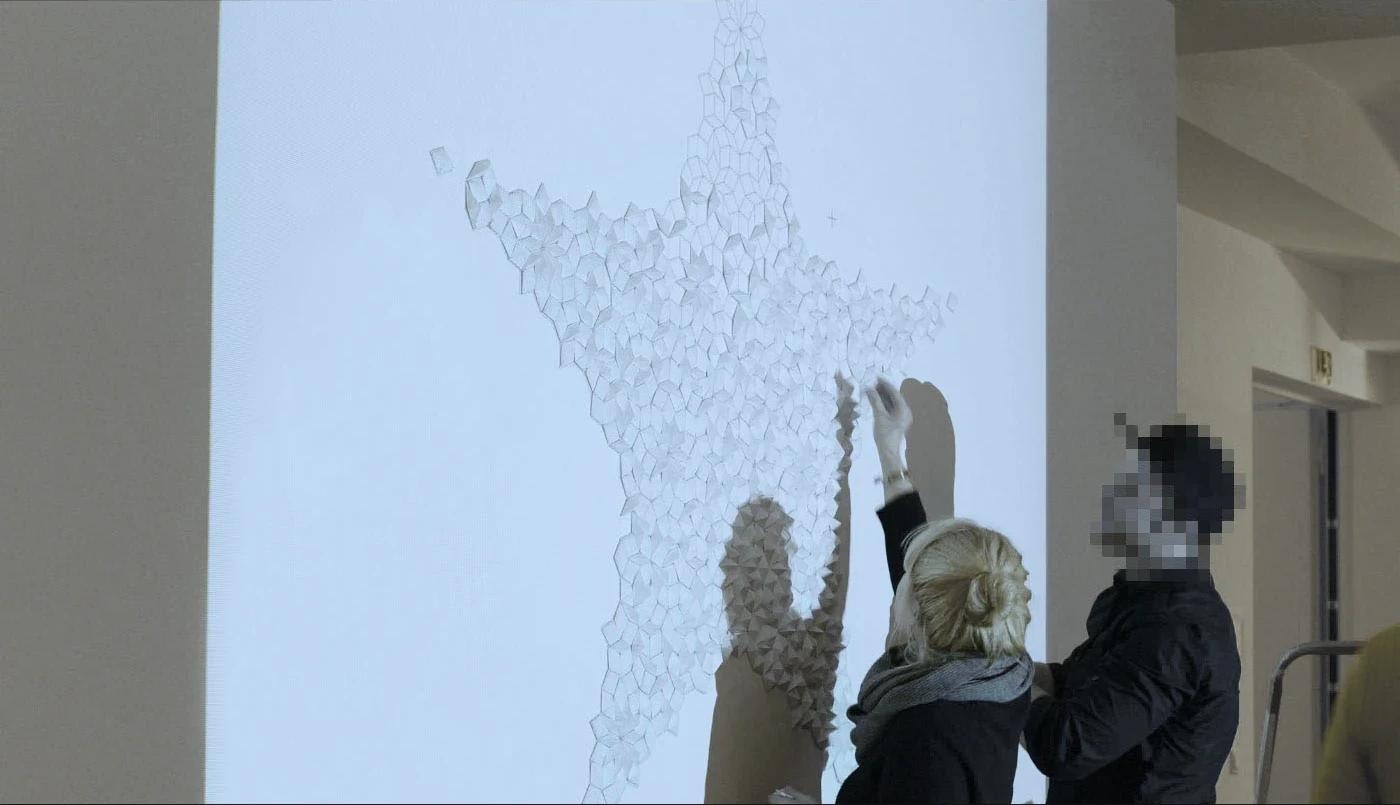
I designed and fabricated a large three-dimensional star from more than a thousand individual folded paper elements.
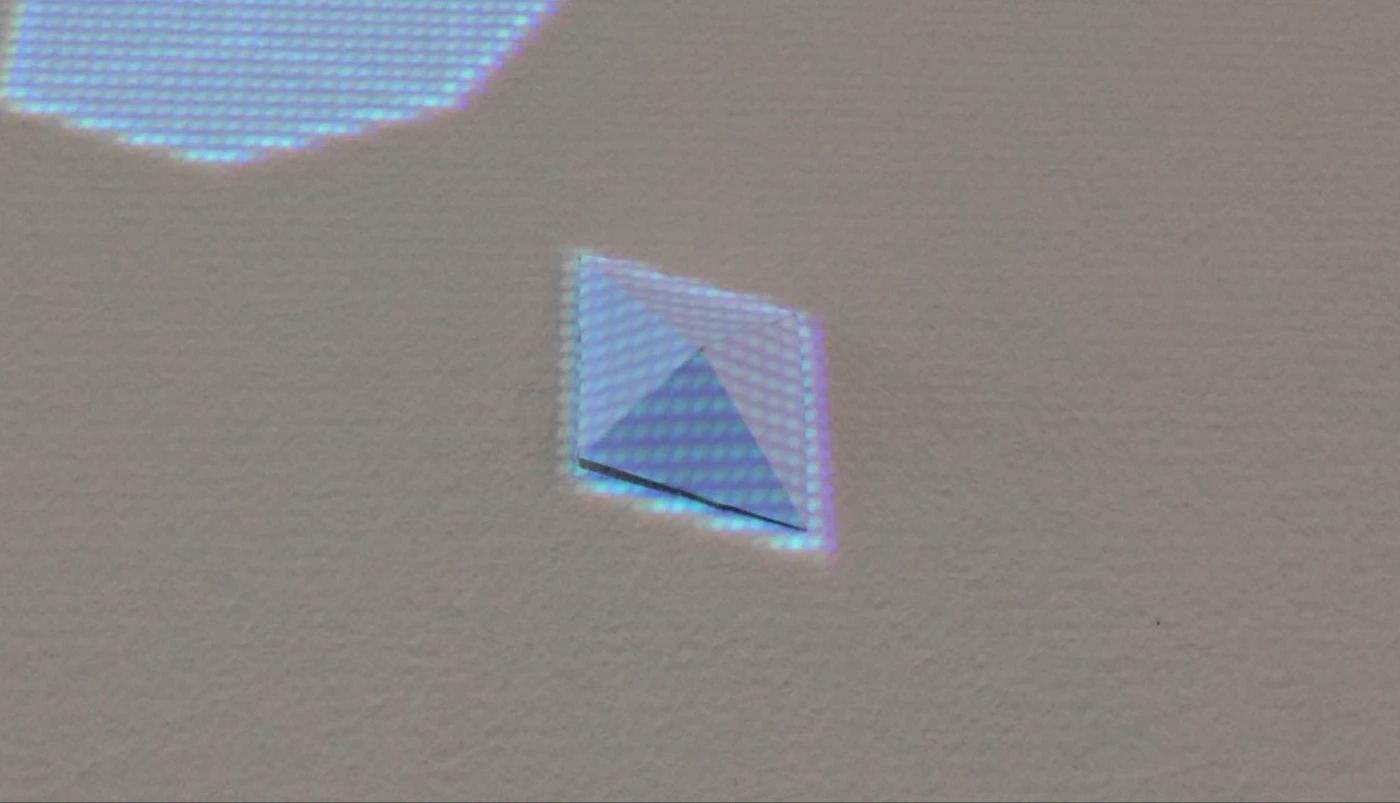
I designed the geometry of each piece, cut the paper using a plotter, folded the elements and fitted them with magnets. I assembled the structure directly onto a metallic wall, bringing together digital fabrication and handcrafted construction.
04 / Interactive installation
Bringing data into physical space.
The visualization extended beyond the computer screen. I integrated projection mapping so that the evolving compositions were projected in real time onto the three-dimensional paper star.
As the incoming EEG data changed, both the screen visualization and its physical projection responded. Biological signals, generative software, light and handcrafted geometry became one interactive experience.
The complete projected star in the physical installation, 21 seconds.
Watch on Vimeo ↗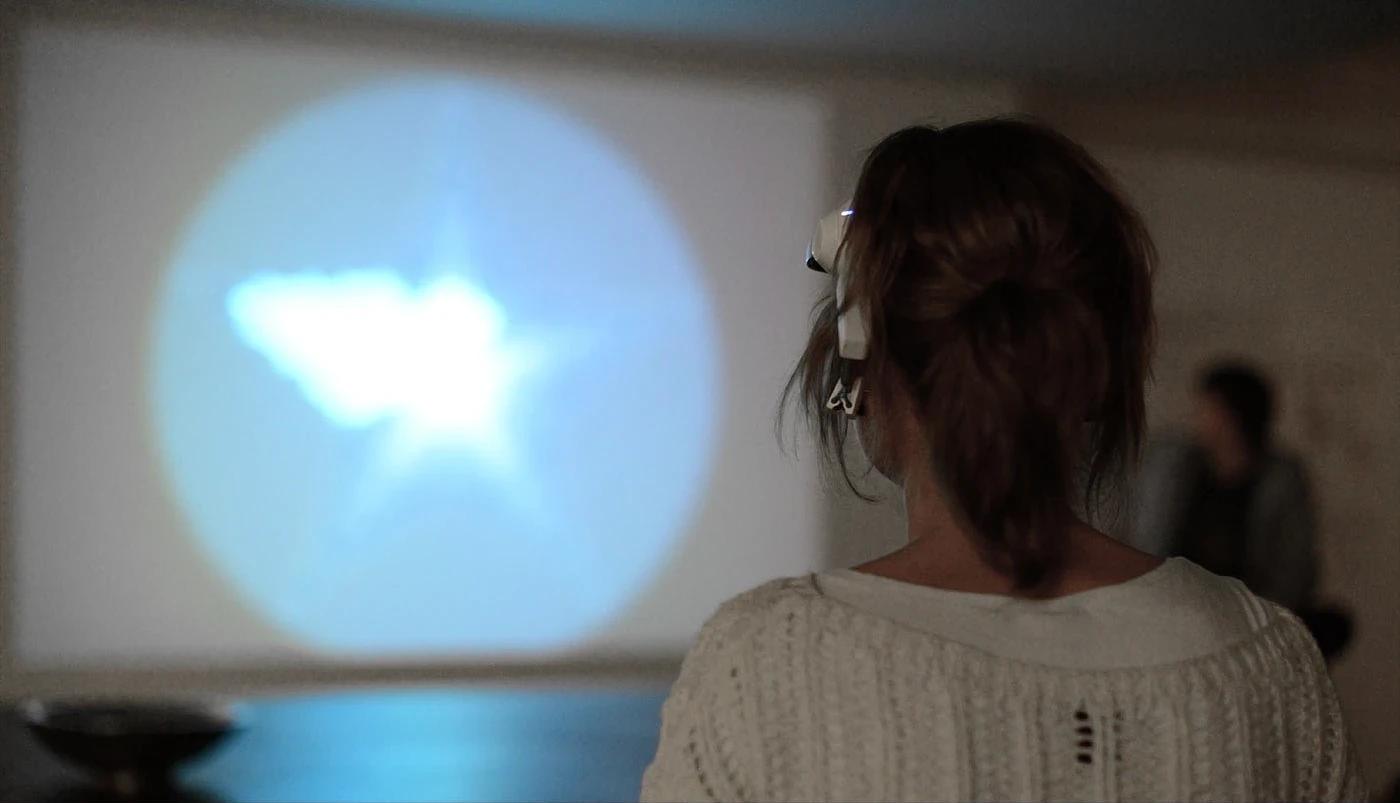
05 / Campaign
From personal exploration to collective identity.
Deepblue networks later adopted my original installation for its Christmas campaign. Employees participated in the experience, watching their brain activity become evolving star compositions.
By manually capturing individual moments, a collection of more than 150 generative graphics was created. The collection connected individual experiences through a shared visual language. The custom Processing software was also released as open source.
Campaign credits
The following credits document the wider campaign team, as listed in the original open-source repository.
- Head of Digital
- Thorsten Schapmann
- Managing Creative Director
- Christian Thron, Oliver Drost
- Creative Director
- Burkhard Müller
- Senior Interaction Designer
- Karsten Bruns
- Interaction Designer
- Javier Garcia
- Developer
- Javier Garcia
- Copywriter
- Astarte Toomeh, Nina Drangmeister
- Motion Designer
- Björn Volkenand, Nils Pfeifer, Leon Friedrich
06 / My contribution
From the first idea to the final installation.
I conceived, designed, programmed, fabricated and assembled Starspitter, taking responsibility for the complete development of the original installation.
My work covered both the digital system and its physical realization:
- Original creative concept and visual development.
- Integration of the NeuroSky MindWave EEG headset.
- Development of the real-time generative visualization software in Processing.
- Design of the physical installation and folded paper geometry.
- Plotter cutting, folding and preparation of more than a thousand individual magnetic elements.
- Assembly of the physical star.
- Integration of the real-time generative visualization and projection mapping.
Starspitter brought together software development, data visualization, interaction design, geometry and physical fabrication.